

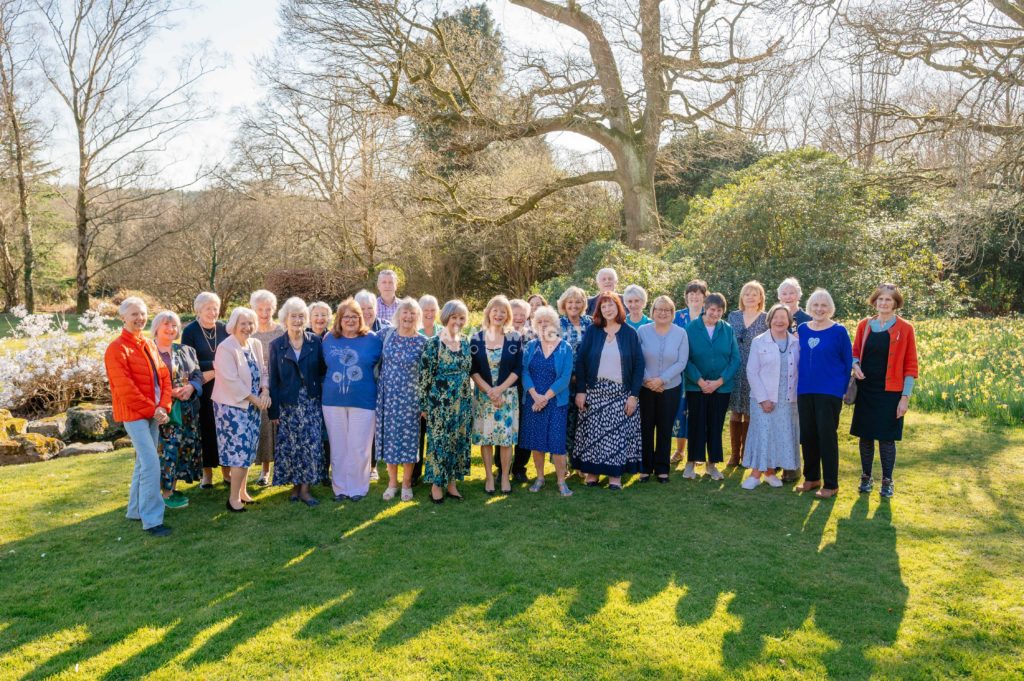
Warnham Evening Flower Club at Roffey Park (©AAH Magazine/Alan Wright Photography)
Warnham Evening Flower Club celebrated its 65th anniversary with a special event at Roffey Park Institute on 21 March. AAH visited and met President Jean Plaskett, Chair Janet Sharp, Competition Secretary Pamela Franczak, and demonstrator Stephen McDonnell-Daly to find out more about the club…
Jean: I have been arranging flowers since I was 15. My parents ran a pub in the north and mum liked to display flowers on the bar. Whereas she would just stick them in a vase, I spent time arranging them properly. When my husband served in the RAF, I always made sure there were floral arrangements in the Mess too. I became a demonstrator, so flower arranging has been a life-long passion. I served as a Sussex area demonstrator for over 30 years, before stopping around Covid.
Pamela: A demonstration by a qualified arranger is the focus on our regular club meetings, held at Warnham Village Hall on the 3rd Tuesday of the month, from February to December (except August) at 7pm. Gaenor Circus, who is not only Programme Secretary but a skilled arranger herself, compiles a varied schedule. Demonstrators typically make five or six arrangements over the course of an hour and a half. The idea is that they provide inspiration and ideas that we can use in our own homes and gardens. Occasionally, we hold Open Meetings, welcoming demonstrators from other parts of the country, beyond Sussex.
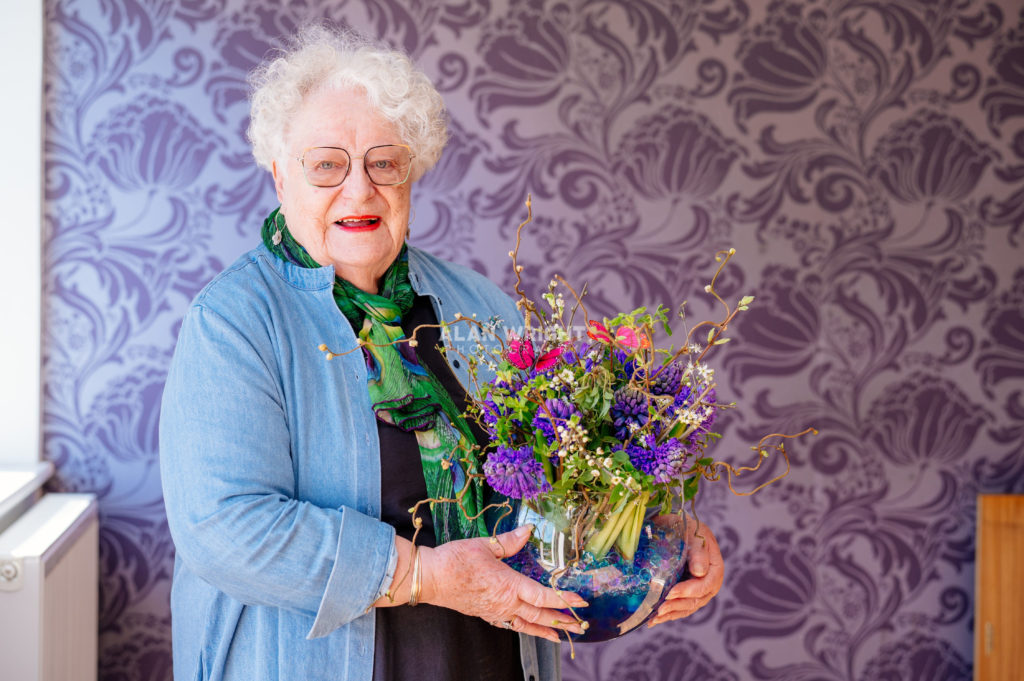
President Jean Plaskett (©AAH Magazine/Alan Wright Photography)
Janet: We used to be associated with the Sussex branch of NAFAS (National Association of Flower Arrangement Societies). However, we are now members of Flower Arranging and Design Sussex, which organises workshops for its members and has its own list of Area and National Demonstrators. We are proud to have a number of qualified demonstrators and judges amongst our membership, so we occasionally source independent florists and arrangers for demonstrations. Stephen is one of our favourite arrangers; as well as being funny, he has talent, having twice been awarded Best in Show at Chelsea Flower Show.
Stephen: I work as a gardener for a private estate, but one of my passions is floral design and demonstrating has taken me around the country and even abroad to Spain, USA and Barbados. I consider it to be an art form, like sculpture or painting, the only difference being that plants are my materials. As an art form, floral arranging has changed. It used to be about filling huge urns with vast plumes of flowers for country houses; now you need to be more inventive with dry materials and foliage to create practical displays. As well as giving people ideas, it’s important to create something with a “wow factor”, even if it’s not a display they can easily replicate. There are plants like Aquilegias and Statice that most people listening will know well – as they’re all gardeners – so as an arranger, you need to offer something else to inspire them.
Jean: There is much more to flower arranging than many assume. It’s a very creative process, as you have to conjure something that is not only eye-catching, but has symmetry. If you have a big flower at the top and a little flower at the bottom, it’ll lose visual impact. I’m known for being honest with my critique, especially with demonstrators like Stephen, who welcomes feedback. It doesn’t happen very often, but if occasion calls for it, I can have a laugh with him and say, “Well, you got that one wrong!”
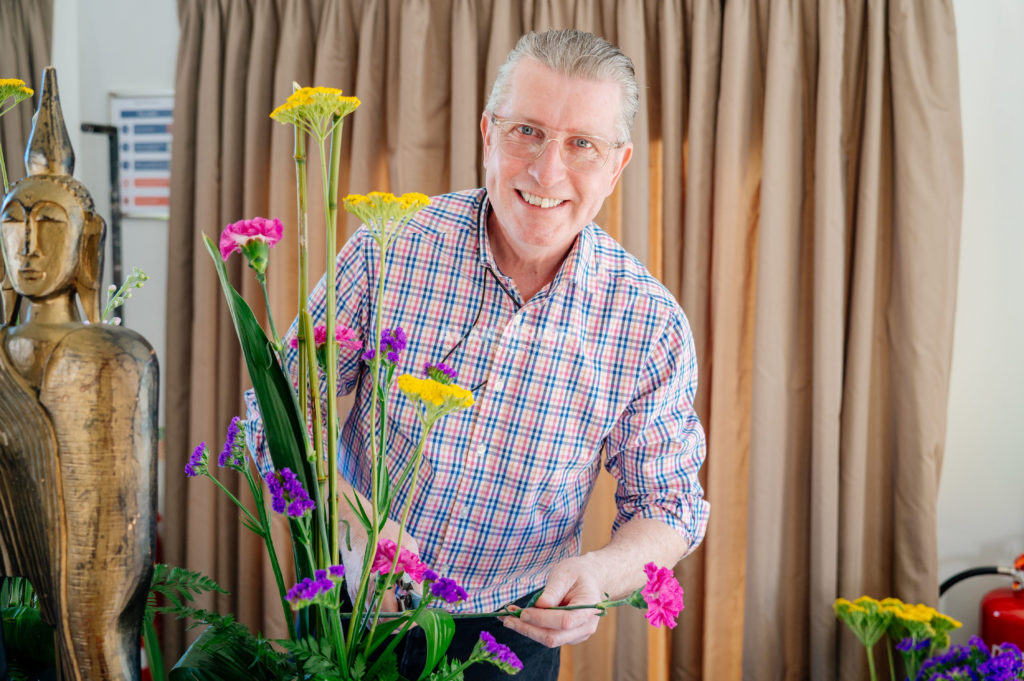
Demonstrator Stephen McDonnell-Daly (©AAH Magazine/Alan Wright Photography)
Janet: Each demonstrator has an allowance for the flowers used in their arrangements. One of the challenges we face is that the price of flowers has risen sharply in recent years. A stem that cost 50p before the pandemic will cost double that now, so demonstrators need to be creative. Working with seasonal flowers helps, as it keeps costs down, while some can source flowers from their own garden.
Jean: Sustainability is an issue too. We are discouraged from using Oasis (floral foam) as it’s not eco-friendly. It seems to be an easy target for campaigners, which is a shame as there are bigger problems in the industry. The impact of importing huge amounts of tulips, roses, carnations and other flowers from overseas – rather than buying seasonal home-grown flowers – is far more damaging to the environment and also raises prices.
Stephen: Being a demonstrator is like being a TV chef, in that you have to be a good cook but also able to hold an audience. There are many skilled gardeners who find it difficult to talk to a crowd. If you can keep your audience engaged, they will be happy with whatever you create. If you’re nervous and lack confidence, and they become agitated, it’ll dampen the impact of your demonstration. People often compare it to the role of a comedian, but of course our humour only works with a knowledgeable audience. I think gardening references would quickly confuse a virgin audience!
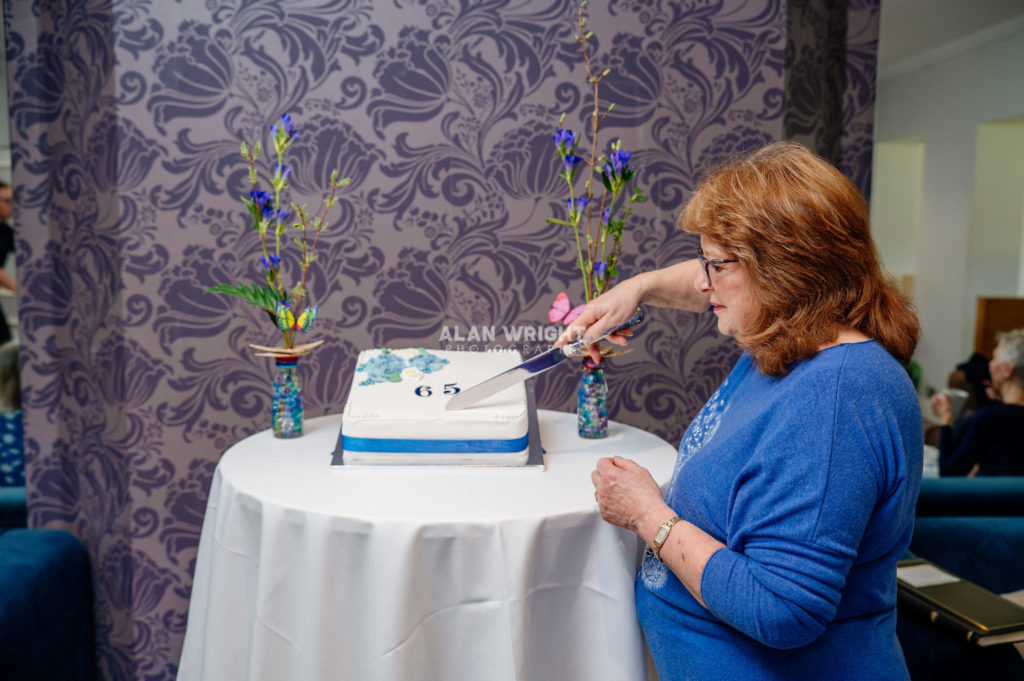
Janet Sharp cuts the cake (©AAH Magazine/Alan Wright Photography)
Pamela: Humour often plays a part in the demonstrations. We welcomed Graham King to our regular Club Meeting in March and he was also entertaining. At each meeting, we provide refreshments, including cakes and biscuits. We hold a raffle too, with the demonstrator’s arrangements as prizes. Members can also take part in an Open Competition held throughout the year. The theme changes each month (March’s was The Joy of Spring), with a qualified judge or the demonstrator choosing the winner, who is presented with the Olive Stanford Cup. At the end of the year, the person who has attained the most points during the 10 competitions is awarded the Molly Orford Cup.
Janet: We have a current membership of over 40. However, like many flower clubs, we find it difficult to recruit new members. I think that’s down to social shifts – with most women working and more grandparents involved in childcare – as well as preconceptions as to what a flower club does. Lots of people think you have to be an arranger to be a member, which isn’t the case. Many members enjoy the social side, meeting up with friends and watching demonstrators come up with inventive displays. There is a school of thought that younger people struggle to sit still for long periods and would perhaps find demonstrator-led workshops more appealing. Workshops are fun and we organise them from time-to-time, but buying flowers and materials for everyone costs money.
Jean: To celebrate our Sapphire anniversary, we gathered at Roffey Park, which has a beautiful setting and a fascinating history. When you retire, it’s so important to be able to continue doing something you enjoy, and men especially struggle to replace working environments. However, if you’ve always had an interest in gardening and flowers, there’s no reason why you can’t carry on doing that. So, the social benefits of clubs like ours are hugely important. Flowers have played a huge part in my life and they still do today.
Further information: Warnham Evening Flower Club meets on the 3rd Tuesday of the month at Warnham Village Hall, Hollands Way, RH12 3RH. Visitors are welcome to attend (£7). www.warnhamflowerclub.org.uk
Originally published in AAH (All About Horsham) Magazine on 1st April 2026. Words by Ben Morris. Photography by Alan Wright.